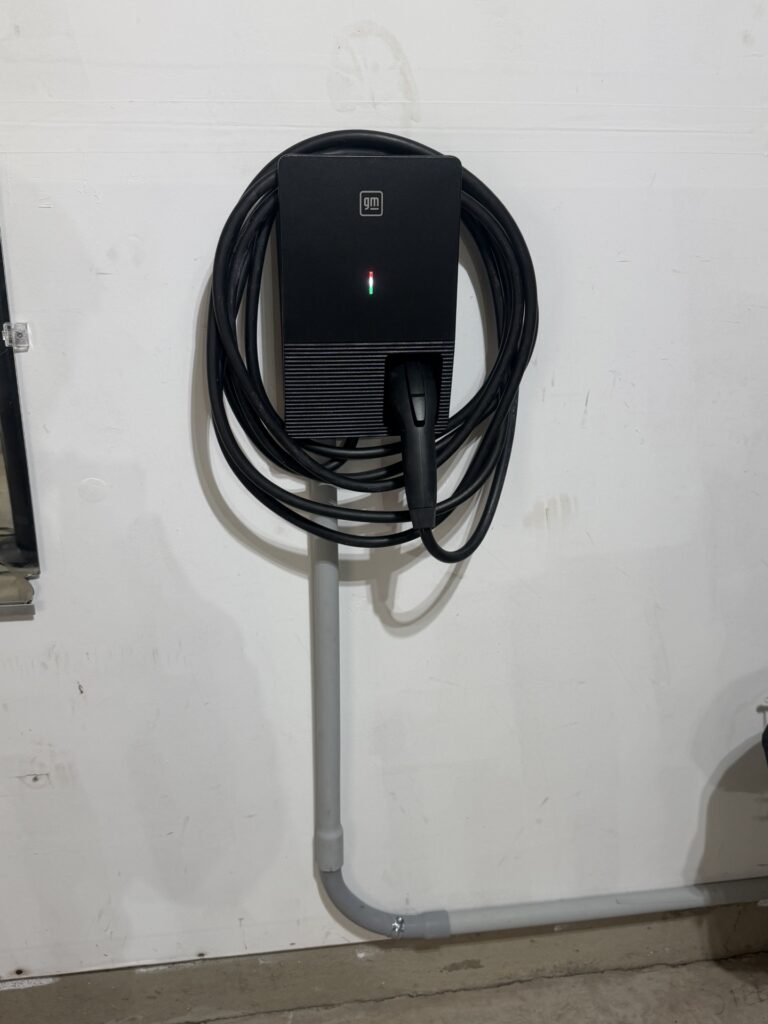
Author: Zackary Michael

Outdoor and Landscape Lighting for Winchester, VA Homes

By early October the sun drops behind the ridge before seven, and for the next five months most of us come home to a dark house. Good outdoor lighting fixes three problems at once: safety on the steps and walkways, security at every approach to the house, and the simple pleasure of a home that looks welcoming from the street instead of vanishing at dusk.

If your current setup is a builder grade porch light and a few solar stakes losing their will to live, here is what a real system involves, what it costs, and how to design one that flatters the house instead of floodlighting it.

How much does landscape lighting cost to install?

Professionally installed low voltage landscape lighting typically runs $2,500 to $5,500 for a front yard scope of eight to twelve fixtures with a transformer and buried wiring, which works out to roughly $200 to $400 per fixture installed. Line voltage work like porch fixtures, floodlights, and new exterior outlets prices separately, usually $150 to $600 per location depending on wiring access.

Fixture quality drives the long term math. Solid brass and copper fixtures shrug off decades of weather, while the bargain kit fixtures corrode and fog within a couple of seasons. The labor to install either is the same, so the budget belongs in the hardware that stays outside year round.

How much does landscape lighting cost to install?, Fox Trail Electric

Low voltage or line voltage: which goes where

Low voltage systems step household power down to 12 volts through a transformer, then feed path lights, uplights, and step lights through shallow buried cable. That low voltage makes them safe around kids, pets, and shovels, easy to adjust as plantings grow, and cheap to run with LED lamps. This is the workhorse for everything out in the landscape.

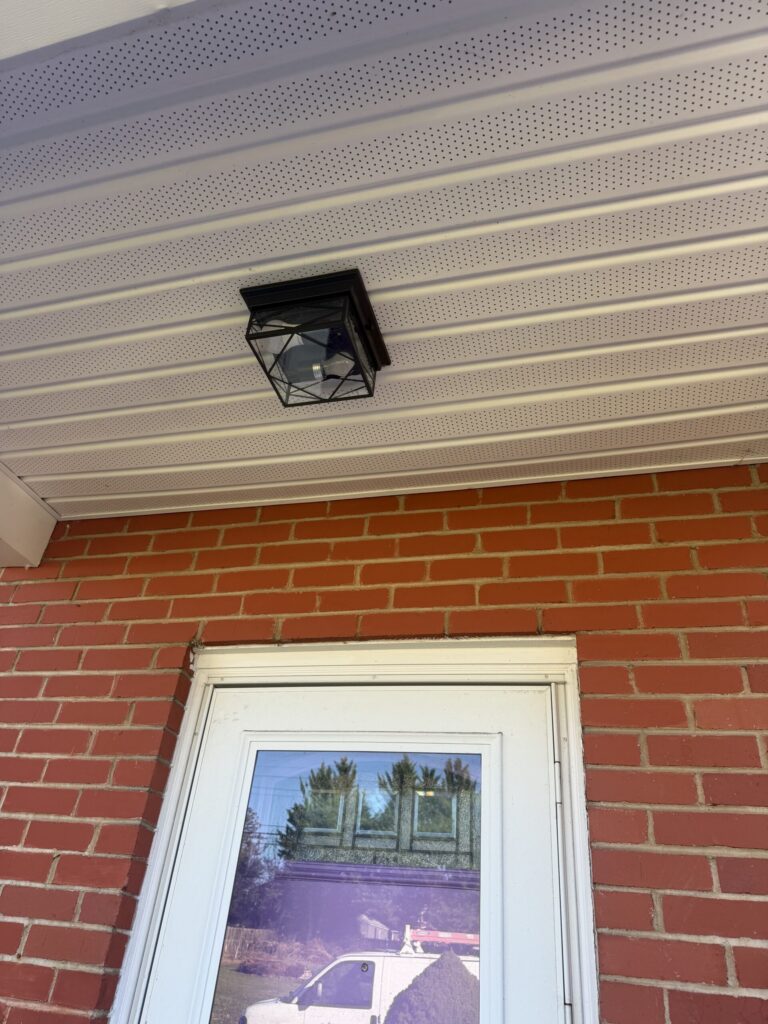
Line voltage, the full 120, belongs where real power is needed: porch and eave fixtures, security floodlights, post lanterns, and outdoor receptacles. That work involves conduit, proper burial depth, and weatherproof boxes, which puts it squarely in licensed electrician territory. Most finished projects blend both, a transformer feeding the landscape and properly wired house fixtures, all switched or scheduled from inside.

Design that flatters instead of blinds

Think in layers: path lights marking the walk, uplights grazing a maple trunk or the stone on the front of the house, a soft wash on the facade, and maybe a downlight from high in a tree throwing moonlight patterns across the lawn. The unlit spaces between fixtures are what make the lit ones read, so restraint is a feature. Warm light around 2700K suits brick, stone, and siding far better than the blue white glare of cheap floods.

Aim matters as much as placement: shield fixtures so the source is hidden, keep beams out of windows, yours and the neighbors’, and light what deserves attention rather than everything equally. Controls finish the job. A photocell brings everything on at dusk, a timer or smart panel shuts it down at midnight, and the patio zone gets its own switch for firepit season.

Design that flatters instead of blinds, Fox Trail Electric

Security lighting that actually works

Effective security lighting removes the dark approaches to the house: the driveway, the garage side door, the back corners. Motion activated floods cover those zones and announce visitors, while steady dusk to dawn fixtures at entry doors let you actually recognize a face on the porch. The goal is even, moderate light. A single blinding flood creates deep shadows right beside it, which is exactly the hiding spot you were trying to eliminate.

Cameras and video doorbells ride on this same infrastructure, and the hardwired versions beat battery units precisely when you need them most, in the cold months when batteries fade fast. If a camera system is on the wish list, plan its power during the lighting project instead of after.

The safety details behind outdoor power

Everything outdoors lives by the wet location rules: GFCI protection on every outdoor circuit, fixtures rated for the weather they will face, covers that keep receptacles protected even with a cord plugged in, and cable buried at proper depth instead of an inch under the mulch waiting for a trowel. Connections need to be rated for wet locations too, because a taped splice underground is a slow motion failure with a schedule of its own.

There is a seasonal bonus to doing this right: dedicated exterior receptacles at the eaves and porch, switched from inside, turn holiday lighting from an extension cord safari into flipping one switch. Wire it in the fall and December gets dramatically easier.

Bottom Line

Good outdoor lighting is a layered, restrained system: low voltage fixtures shaping the landscape, line voltage handling the house and security, GFCI protection behind all of it, and roughly $2,500 to $5,500 covering most front yard projects. Fall is the season it earns its keep, when every evening arrives early. Fox Trail Electric designs and installs outdoor and landscape lighting across Winchester and Frederick County, and we are glad to walk your property at dusk and show you exactly where light will do the most good.

Related reading: our lighting installation repair services, Recessed Lighting in Winchester, VA: What to Know Before You Add It, Smoke Detectors in Winchester, VA Homes: Placement, Power, and Age

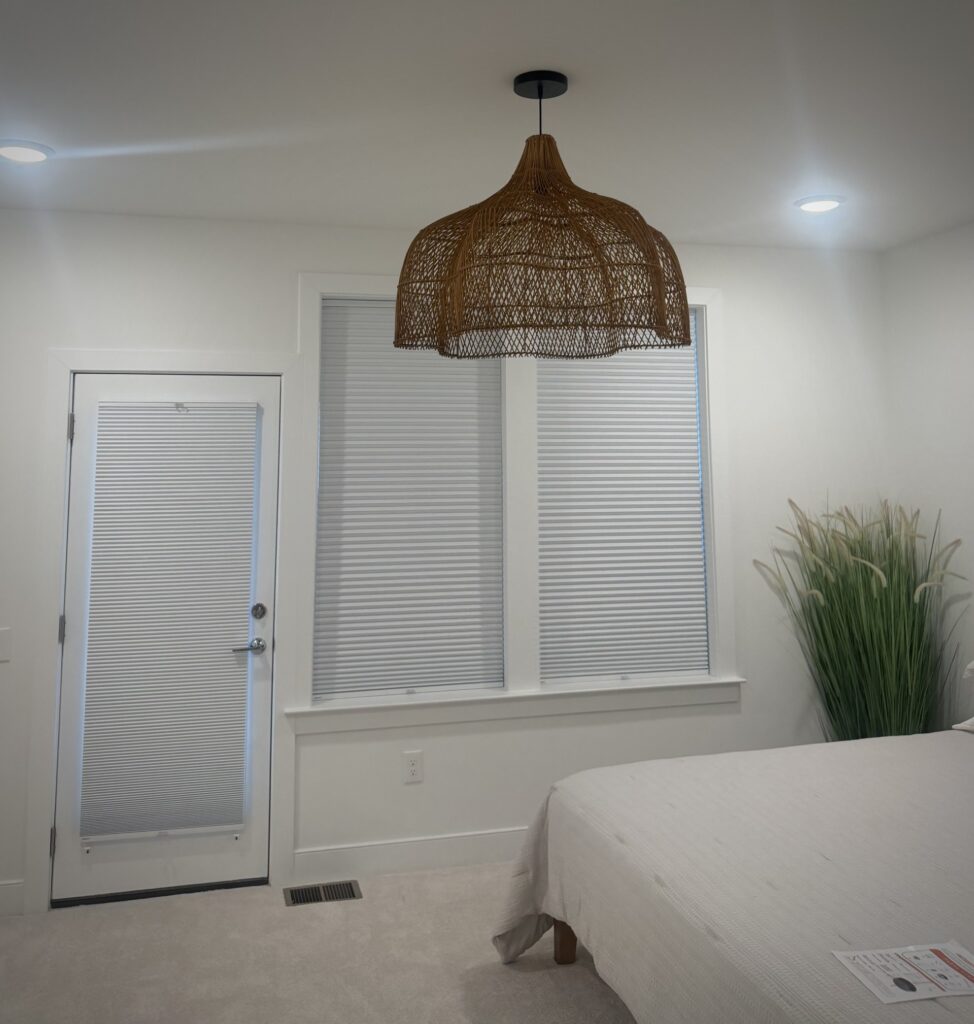
Smoke Detectors in Winchester, VA Homes: Placement, Power, and Age

Every October, Fire Prevention Week rolls around, the clocks change soon after, and the same advice repeats: check your smoke detector batteries. Good advice, but incomplete. Fresh batteries in a detector that is fifteen years old, mounted in the wrong spot, and unable to wake anyone at the far end of the house is a false sense of security running on brand new power.

Heating season is when home fires climb, with furnaces firing up, space heaters coming out of closets, and fireplaces earning their keep. Before all that starts, here is what actually makes a smoke detector system work: placement, age, and interconnection.

Where are smoke detectors required in a home?

Current safety standards call for a smoke alarm inside every bedroom, in the hallway outside each sleeping area, and on every level of the home including the basement. In newer construction they must be hardwired with battery backup and interconnected, meaning when one alarm sounds, every alarm in the house sounds. Older Winchester homes were built to older rules, which is exactly why so many are underprotected today.

Placement within the room matters too. Smoke rises, so alarms belong on the ceiling or high on a wall, away from dead air corners, and a reasonable distance from bathrooms and kitchen appliances so steam and toast do not train the family to ignore alarms. Near the kitchen, a photoelectric model cuts the nuisance trips dramatically.

Where are smoke detectors required in a home?, Fox Trail Electric

The 10 year expiration nobody checks

Smoke detectors expire. The sensors inside degrade whether or not the unit ever sounds, and the industry standard is replacement every 10 years, no matter how faithfully the batteries were changed. Every detector has a manufacture date printed on the back. If you pull one down and find no date at all, it predates the labeling requirement, which means it is old enough to replace on the spot.

Here is the pattern we find constantly: every alarm in the house is original to the build or the last renovation, which means they all expired together years ago. Newer sealed models with 10 year batteries solve the battery nagging and the expiration question in one move, since the whole unit retires at once. And a detector that chirps after a battery change is usually announcing its own retirement, not a defect.

Why interconnection saves lives at 2 AM

Picture a fire starting in the basement at two in the morning, with bedroom doors closed upstairs, as fire safety folks now recommend. A standalone basement alarm can sound for precious minutes before anyone upstairs hears it through two floors and a closed door. Modern furnishings burn faster than the furniture of decades past, and the realistic escape window is a few minutes, not many.

Interconnection closes that gap: the basement alarm trips and the one beside your bed sounds in the same second. Hardwired interconnection is the standard in new construction and easy to add during any rewiring or renovation work. For finished homes, wireless interconnected models now do the same job over radio with no new cable, which makes this life safety upgrade available to every house, not just new ones.

Why interconnection saves lives at 2 AM, Fox Trail Electric

Carbon monoxide belongs in the same conversation

The same season that raises fire risk raises carbon monoxide risk: furnaces lighting for the first time since spring, gas logs running, generators handling storm outages, and cars warming up in attached garages. CO is invisible and odorless, and the symptoms mimic the flu, which is why detection is the only real defense.

Homes with any fuel burning appliance or an attached garage should have CO alarms outside each sleeping area and on every level. Combination smoke and CO units simplify the count and take one spot on the ceiling instead of two. CO sensors expire even faster than smoke sensors, typically 5 to 10 years, so the date check applies here doubly.

When an electrician belongs in the conversation

Battery swaps are homeowner work. The electrician earns his visit when hardwired units need replacing, since bases and wiring harnesses vary by brand and era, when a mystery chirp survives every battery change, or when an interconnect circuit stops passing the signal between alarms. We also trace the classic haunted house symptom, every alarm sounding at 3 AM with no smoke, which usually comes down to one failing unit or a wiring fault poisoning the whole loop.

The best moment to upgrade is during any other electrical work. A panel upgrade, a rewire, or a renovation already has walls open and a crew on site, and adding hardwired interconnected alarms at that point costs a fraction of a standalone visit.

Bottom Line

Count your alarms: one in every bedroom, one outside each sleeping area, one on every level. Check the dates and replace anything past 10 years, then interconnect if you can, because the alarm that saves your family is the one beside the bed, not the one two floors down. Fox Trail Electric installs and replaces hardwired, interconnected smoke and CO alarms across Winchester and Frederick County, an easy add to any electrical visit before heating season settles in.

Related reading: Hot Tub Wiring in Winchester, VA: What a Safe Install Involves, Recessed Lighting in Winchester, VA: What to Know Before You Add It

Recessed Lighting in Winchester, VA: What to Know Before You Add It

Few upgrades change how a room feels as thoroughly as good light from the ceiling. Dark corners disappear, the kitchen counters finally get light where the work happens, and the dated dome fixture in the middle of the room stops doing all the heavy lifting badly.

The timing argument writes itself in this climate: by mid fall the sun sets before dinner, and every room in the house lives on artificial light for the next five months. Here is what recessed lighting costs, how to lay it out so it flatters the room, and what installation actually looks like.

How much does recessed lighting cost to install?

Most Winchester installations run $150 to $350 per light including the fixture, wiring, and basic switching, so a typical six light living room lands between $1,000 and $2,000. Access sets the range: rooms with open attic above price near the bottom, and ceilings with finished floors overhead price near the top because the wiring takes more fishing and patching.

New dimmers, additional switch locations, and drywall repair add modestly to the total. Larger projects earn better per light pricing, which is why lighting the kitchen, hallway, and living room in one visit usually beats three separate small jobs.

How much does recessed lighting cost to install?, Fox Trail Electric

How many lights, and where they go

The classic spacing rule says divide the ceiling height by two: with 8 foot ceilings, lights sit roughly 4 feet apart and about 2 to 3 feet off the walls. Rules of thumb only start the conversation, though. Purpose finishes it. Kitchen counters, reading corners, and desks want light aimed at the task, while the middle of a seating area does better with soft, even coverage than with a bright spot on someone’s head.

The mistake to avoid is the runway look, a rigid grid of too many lights sized for an operating room. Fewer fixtures, placed with intent, almost always beats more. Washing the walls with light makes a room feel larger and calmer, and recessed cans work best as the ambient layer while lamps and pendants add warmth at eye level.

Canless LED or traditional housings

Canless LED fixtures, the thin wafer style discs, have taken over the retrofit market for good reasons: they fit shallow ceilings where old cans never could, they are rated for contact with insulation, and they seal against air leakage into the attic. That last point matters more than people expect. Old style leaky cans quietly pump heated air into the attic all winter, and a tight ceiling pays you back on every heating bill.

Traditional housings still make sense when you want interchangeable bulbs and specialty trims. But integrated LED wafers are rated for tens of thousands of hours, and when one eventually dies decades from now, the whole inexpensive unit swaps out in minutes. For most Winchester retrofits, canless wins on cost, fit, and efficiency.

Canless LED or traditional housings, Fox Trail Electric

Dimmers, color temperature, and avoiding regret

Two decisions determine whether you love the result. First, color temperature: 2700K reads warm and relaxed, right for living rooms and bedrooms, while 3000K reads cleaner and crisper, a favorite for kitchens and baths. Many wafer lights now include a selectable switch, so the electrician can set it during install. Pick one temperature per room and match it exactly, because mixed whites in one ceiling always look accidental.

Second, dimming. Every recessed layout deserves dimmers, and LED fixtures demand LED rated ones. Pair mismatched hardware and you get flicker, shimmer, or a light that will not dim below half. Buying fixtures from one brand and batch keeps color and dimming behavior identical across the ceiling, which is exactly the kind of detail that separates a professional install from a weekend experiment.

What installation day looks like

A good crew starts with layout, marking every light location on the ceiling for your approval before a single hole gets cut. Then holes are cut, cable gets fished from the switch, fixtures snap in, and dimmers go on the wall. With attic access above, most rooms wrap in a day with no drywall damage at all. Without it, expect a few strategic openings, patched before the crew leaves and ready for paint.

Power will be off to parts of the house for stretches of the day, and new circuits or switch locations bring a permit along. That is the whole disruption. Book it before the holiday hosting season and the newly bright rooms will carry you straight through the dark months.

Bottom Line

Plan on $150 to $350 per light installed, lay out the fixtures around how the room actually gets used, choose sealed LED wafers with one color temperature per room, and put every zone on an LED rated dimmer. Do those four things and recessed lighting is the best money a dark room can spend. Fox Trail Electric designs and installs recessed lighting across Winchester and Frederick County, and we are glad to mark up a layout with you before anyone cuts a hole.

Related reading: our lighting installation repair services, Aluminum Wiring in Older Winchester, VA Homes: Risks and Real Fixes, Hot Tub Wiring in Winchester, VA: What a Safe Install Involves

Hot Tub Wiring in Winchester, VA: What a Safe Install Involves

Fall is when hot tubs sell around here, and it is easy to see why: a crisp October evening, steam rising off the water, the first cold snap making the whole purchase feel like genius. The dealer delivers the tub to the pad, and between the delivery crew leaving and the first soak stands one critical project, the electrical work. And no, a heavy extension cord is not the answer.

A hot tub is the rare purchase where water, heat, and high amperage all meet a few inches from bare skin. Here is what a safe installation involves, what it costs, and what to sort out before the tub ever lands in the driveway.

What electrical work does a hot tub need?

Most full size hot tubs require a dedicated 240 volt, 50 amp circuit with GFCI protection, an emergency shutoff disconnect mounted within sight of the tub but at least five feet from the water, and properly buried wiring running from the house. In Winchester, the electrical side of a hot tub install typically runs $800 to $2,500 depending on the distance from your panel and whether the panel has capacity to spare.

Smaller plug and play tubs run on a standard 120 volt outlet, and they trade convenience for performance, heating slowly and struggling to hold temperature outdoors in a Virginia January. Plenty of buyers who start there end up paying for the real circuit within a couple of years, so it is worth pricing it up front.

What electrical work does a hot tub need?, Fox Trail Electric

The circuit: GFCI protection is the whole game

A hot tub is a large body of water with pumps and heaters running through it, occupied by people. GFCI protection, usually delivered through an outdoor spa panel with a GFCI breaker, watches for any current leaking where it should not go and cuts power in a fraction of a second. On this project it is not an upgrade or an option. It is the entire safety case, backed by code.

The supporting details matter just as much: wire gauge sized for the run length, conduit rated for burial and installed at code depth across the yard, copper conductors at the equipment, and connections in the tub’s equipment bay torqued to the manufacturer’s specification. Every tub has a spec sheet listing exactly what it needs, and a good electrician quotes from that sheet, not from memory. Tubs range from 30 to 60 amps, and the sheet settles it.

The disconnect and the details inspectors check

Code requires a shutoff disconnect within line of sight of the tub, at least five feet from the water and no more than fifty away. It exists so anyone can kill power instantly in an emergency and so a technician can service the equipment safely. Inspectors also check clearances from overhead lines, distances to nearby receptacles, and how the wiring enters the equipment bay.

The detail homeowners have never heard of is bonding. All the metal within reach of the tub, and the water itself through the equipment, gets connected into one electrical grid so no voltage difference can exist between things a wet hand might touch at the same time. It is invisible when done and dangerous when skipped, and it is the single most common gap in amateur installs.

The disconnect and the details inspectors check, Fox Trail Electric

Does your panel have room for a hot tub?

A 50 amp circuit is one of the biggest single asks a house can make, on par with an EV charger. A modern 200 amp panel usually handles it without drama. The 100 amp panels still common in older Winchester homes often cannot, especially with an electric range, dryer, or car charger already aboard. A load calculation answers the question before anyone commits.

If the panel comes up short, the options run from a subpanel to a full panel upgrade in the $2,000 to $4,500 range. It stings to add that to a hot tub budget, but it is worth sizing once for everything on your wish list, since the same capacity question comes back with every major addition, from EV chargers to workshop circuits.

Permits, timing, and planning the install

Hot tub circuits require an electrical permit and inspection, in the city and in Frederick County alike, and this is a project where the inspection genuinely earns its keep: GFCI function, bonding, burial depth, and disconnect placement all get verified on a system your family will sit in. Unpermitted spa wiring is also a reliable red flag for insurers and home inspectors later.

The practical timing tip: schedule the electrician when you order the tub, not after delivery. The trench, conduit, and disconnect can all be finished ahead of time, so the only remaining work on delivery day is the final connection. Fall install calendars fill up fast once the first frost hits, and the whole point is soaking in October, not staring at a cold acrylic shell until December.

Bottom Line

A safe hot tub installation means a dedicated 240 volt GFCI protected circuit, a disconnect within sight of the water, proper bonding, buried conduit, and a permit with an inspection behind it, typically $800 to $2,500 on the electrical side. Handle the wiring when you order the tub and the first soak happens on schedule. Fox Trail Electric wires hot tubs and spas across Winchester and Frederick County, and if you send us the spec sheet before delivery, we will have everything ready when the crane pulls away.

Related reading: Why Are Your Lights Flickering? A Winchester, VA Troubleshooting Guide, Aluminum Wiring in Older Winchester, VA Homes: Risks and Real Fixes

Aluminum Wiring in Older Winchester, VA Homes: Risks and Real Fixes

For about a decade starting in the mid 1960s, copper prices spiked and builders across the country wired new homes with aluminum instead. Winchester and Frederick County got their share, and thousands of those houses are still standing today with the original aluminum behind the walls.

If your home dates from that window, this topic deserves thirty minutes of your attention. Not panic, attention. Aluminum wiring has a real, well documented failure mode, and it also has proven, affordable fixes that do not require gutting the house.

Is aluminum wiring dangerous?

Aluminum branch circuit wiring installed from roughly 1965 to 1975 carries a significantly higher risk of overheating at connections than copper. Federal safety research found homes wired with it are far more likely to develop fire hazard conditions at outlets and switches. The metal itself conducts electricity just fine. The danger lives at the connection points, and that is exactly what the approved repairs address.

One distinction matters up front. This concern is about the small branch circuit wires feeding your outlets and lights. The large aluminum cables feeding your panel from the meter are stranded, rated for the job, and standard practice even in new construction. Finding aluminum service cable is normal. Finding aluminum branch circuits is the thing to act on.

Is aluminum wiring dangerous?, Fox Trail Electric

How to tell if your home has it

Start with the build date. Homes built or expanded between 1965 and 1975 are the prime candidates. The confirmation is printed on the wire itself: exposed runs in the basement, attic, or garage will read AL, ALUM, or ALUMINUM on the jacket every foot or so, and the conductors show silver instead of copper orange where they enter the panel. Leave the panel cover in place, though. That check belongs to a professional.

The symptoms mirror loose connection problems, because that is what they are: warm outlet or switch plates, flickering lights, a faint plastic smell near devices, outlets that die without explanation, and breakers that trip for no obvious reason. A home from the window showing any of these deserves an evaluation this month, not this year.

Why aluminum connections fail

Aluminum expands and contracts with heat far more than copper, so every heating and cooling cycle works the wire a little looser under its terminal screw. It also oxidizes, and aluminum oxide resists current instead of carrying it. The metal even deforms slowly under pressure, what engineers call creep. Three small effects, all pushing one direction: connections loosen, resistance climbs, and heat builds at the junction.

The failure then feeds itself. Heat accelerates the oxidation and loosening, which creates more heat, at a connection buried in a wall where nobody can see it glow. The devices of that era were designed with copper in mind, which made the mismatch worse. This is why every legitimate fix targets the terminations rather than the wire runs between them.

Why aluminum connections fail, Fox Trail Electric

The approved fixes and what they cost

The gold standard short of rewiring is the COPALUM crimp, a special tool that permanently bonds a copper pigtail onto each aluminum conductor, so every device connection is made on copper. Only certified installers can perform it, and whole home remediation commonly runs $1,500 to $4,000. The close second is the AlumiConn connector, a small lug block torqued to specification, with similar economics and wider availability. Either one, done at every outlet, switch, and fixture, resolves the hazard.

What does not fix it: ordinary twist connectors joining copper to aluminum, and simply swapping in new outlets. CO/ALR rated devices are acceptable on 15 and 20 amp circuits but rank as the weakest approved option. The permanent solution is a full copper rewire, and if walls are opening for a renovation anyway, the math can tilt that direction.

Insurance, inspections, and selling the house

Insurance carriers ask about aluminum wiring, and their responses range from surcharges to requiring proof of remediation to declining coverage altogether. Home inspectors flag it on every sale, and discovering it mid transaction costs far more in negotiating leverage than the repair costs in dollars. Handling it on your own schedule beats handling it during a contract deadline with a nervous buyer watching.

After remediation, keep the paperwork: the invoice naming the method, the permit, and the inspection record. That small file answers every future insurer and buyer in one motion, and it turns a scary word in a listing into a solved line item.

Bottom Line

Aluminum branch wiring is a known, manageable risk. The connections fail, not the wire, and remediation with COPALUM or AlumiConn connectors typically runs $1,500 to $4,000 for a whole home, a fraction of rewiring. If your Winchester home dates from 1965 to 1975 and nobody has ever addressed the wiring, an evaluation is overdue. Fox Trail Electric assesses and remediates aluminum wiring across Winchester and Frederick County, and we will tell you plainly whether yours needs work now or just watching.

Related reading: Whole Home Surge Protection in Winchester, VA: Is It Worth It?, Why Are Your Lights Flickering? A Winchester, VA Troubleshooting Guide

Why Are Your Lights Flickering? A Winchester, VA Troubleshooting Guide

Flickering lights sit in a strange category: sometimes the cause is a two dollar bulb, and sometimes it is the most urgent electrical problem a house can have. The trick is knowing which one you are looking at, and the good news is that the pattern of the flicker tells most of the story before anyone opens a panel.

As the evenings stretch longer into fall and the lights run more hours, flicker that hid all summer starts getting noticed. Here is how to read what your house is telling you, roughly in order from harmless to call someone this week.

Why are my lights flickering?

The scope of the flicker is the diagnosis. One flickering lamp or fixture usually means a loose bulb, a failing bulb, or a dimmer mismatch. A whole room or circuit flickering points to a loose connection or an overloaded circuit. The whole house flickering, especially when large appliances kick on, signals a service or neutral problem that needs professional attention promptly.

Match your symptom to those three buckets and you know whether tonight’s fix is a bulb, a scheduled service call, or a call first thing tomorrow. Here is each level in detail.

Why are my lights flickering?, Fox Trail Electric

Start with the harmless causes

Tighten the bulb first, with the switch off. Then suspect the bulb itself: inexpensive LED bulbs flicker as their internal drivers age, and a failing one can strobe like a tiny nightclub. Swap in a known good bulb from another room and watch what happens. If the problem follows the bulb, the mystery is solved for pocket change.

The most common culprit in updated homes is the dimmer. Older dimmers were engineered for incandescent loads, and LED bulbs on those dimmers shimmer, flicker, or refuse to dim low without complaint. The fix is an LED rated dimmer paired with bulbs from a single brand so they all behave the same way. If the flicker lives in one fixture and follows the bulb or the dimmer, you have found your answer.

One room or circuit: loose connections at work

When a whole room flickers, think connections. Outlets and switches wired with quick backstab connections loosen over the decades, and every loose joint heats, cools, and loosens a little more. A worn switch can do it. So can an aging splice in a junction box. If lights flicker when someone walks across the floor above, that is a loose connection responding to vibration, which is as classic as electrical symptoms get.

Load problems show up here too. If the room dims every time the microwave, vacuum, or space heater starts, that circuit is running near its limit. A slight, brief dip when a big motor starts is common in older homes, but a pronounced, repeatable flicker deserves an electrician’s eyes. Homes from the aluminum wiring era deserve extra urgency, since loose aluminum connections carry real fire risk.

One room or circuit: loose connections at work, Fox Trail Electric

Whole house flicker: the one that cannot wait

When lights flicker through the entire house, when brightness seesaws from room to room, or when the flicker syncs with the HVAC or well pump starting, the problem lives upstream: a loose or corroded neutral, failing service entrance connections, a worn meter base, or trouble on the utility side. A loose neutral in particular can send wild voltage swings through your circuits, cooking electronics and creating genuine fire risk.

This is the flavor of flicker that earns a same week call, and often a same day one. An electrician can determine quickly whether the fault sits on your side or the utility’s, and if it belongs to the power company, they coordinate that repair. What you should not do is shrug it off because it comes and goes. Intermittent is exactly how loose connections behave, right up until they fail.

What a diagnostic visit looks like

Expect questions first: when it happens, which rooms, what else is running at the time. Then measurement, voltage under load at the panel and at the affected circuits, a check of breaker connections and torque, and a look at the usual suspects from backstabbed devices to the service neutral. Most Winchester diagnostic visits run $150 to $300, and that fee is commonly credited toward the repair.

The fixes range from pleasantly small, a tightened lug or a replaced switch, to service level repairs that were quietly becoming emergencies. Either way you walk away with an actual answer instead of a symptom you have learned to live with. Flicker is one of the few electrical problems that announces itself before something fails, which makes it one of the cheapest warnings your house will ever give you.

Bottom Line

Read the scope: one lamp is a bulb or dimmer problem you can chase yourself, one room is a loose connection worth a scheduled visit, and whole house flicker is a service problem that should not wait out the season. Trust the pattern, not the hope that it stops on its own. Fox Trail Electric diagnoses flickering lights across Winchester and Frederick County, and most visits end with a specific fix instead of a lingering mystery.

Related reading: GFCI Outlets in Winchester, VA: Where Your Home Needs Them and Why, Whole Home Surge Protection in Winchester, VA: Is It Worth It?

Whole Home Surge Protection in Winchester, VA: Is It Worth It?

Ask most homeowners what protects their electronics and they point at the power strip behind the television. Meanwhile the furnace control board, the well pump, the refrigerator, the garage door opener, and the EV charger all sit wired straight into the panel with no protection at all, and every one of them carries a circuit board now.

Late summer and early fall bring some of the Shenandoah Valley’s liveliest thunderstorm weather, which makes this the right season to answer a question we hear year round: is whole home surge protection actually worth the money, or is it just another line on the quote?

Is whole home surge protection worth it?

For nearly every modern household, yes. A whole home surge protective device installs at your electrical panel, typically costs $300 to $700 including installation, and clamps down voltage spikes before they reach anything you own. Compare that to replacing a single HVAC control board, often $600 or more with labor, and the device can pay for itself the first time it earns its keep.

The honest caveat: no device fully stops a direct lightning strike on your house, a rare event with its own insurance conversation. What it absolutely handles is everything more common, nearby strikes riding in on the lines, utility switching events, and the thousands of small surges your own appliances create every year.

Is whole home surge protection worth it?, Fox Trail Electric

Where surges actually come from

Most people picture lightning, but by most industry estimates around 80 percent of surges start inside the house. Every time a motor kicks on or off, the AC compressor, the well pump, the refrigerator, the sump pump, it sends a small voltage spike backward through the wiring. Each one is harmless on its own. Thousands of them a year quietly shorten the life of every electronic device in the building.

The external hits are rarer and nastier: lightning striking a transformer down the road, grid switching as the utility reroutes power, a car meeting a pole along Route 522. Events like those can push thousands of volts through a system built for 240, and they are exactly what a panel mounted device exists to absorb.

What the panel device does that power strips cannot

A whole home unit, what electricians call a Type 2 surge protective device, mounts at the panel and shunts excess voltage safely to ground before it travels down your branch circuits. It protects everything at once, including all the hardwired equipment no strip can ever reach: the HVAC system, the range, the dishwasher, the water heater controls, the well pump, and the EV charger in the garage.

Power strips still have a role, but a supporting one. A good point of use protector adds a second layer for sensitive gear like computers and televisions. Strips also degrade with every hit they take and usually keep passing power afterward with no protection left, which is a false sense of security in a beige plastic bar. The right setup is layered: the panel device takes the big hits, the strips catch what little remains.

What the panel device does that power strips cannot, Fox Trail Electric

Your house carries more electronics than you think

Twenty years ago a bad surge might cost you a VCR. Today the average home has circuit boards in the washer, the dryer, the furnace, the water heater, the thermostat, the doorbell, the garage opener, and half the light switches, plus the computers and chargers everyone can see. When a strong surge hits an unprotected system, the damage is not one device. It is a scavenger hunt through the whole house finding out what else died.

The electrical code has caught up with this reality. Since the 2020 code cycle, new panel installations and replacements are required to include surge protection. If your panel was upgraded recently, you may already have a device and not know it. If an upgrade is on your horizon, the surge protector should be part of that conversation automatically.

Installation, ratings, and what to look for

Installation is quick work for a licensed electrician: the device takes the equivalent of two breaker spaces, connects through a dedicated breaker, and goes in within an hour, less when paired with other panel work. If your panel is completely full, there are compact options and workarounds, which is one more reason this pairs naturally with a panel upgrade or an EV charger project.

On the product side, look for a UL 1449 listed device, a surge current rating comfortably in the tens of thousands of amps, and indicator lights that confirm the unit is still alive, because these devices sacrifice themselves absorbing major events. Some models back their protection with connected equipment warranties. After any known strike nearby, glance at those indicators. A dead protector protects nothing, and it fails silently.

Bottom Line

For $300 to $700 installed, a whole home surge protector stands guard over every circuit you own, from the furnace board to the EV charger, against both storm season and the daily surges your own appliances generate. It will not stop a direct lightning hit, but it handles nearly everything else, and it costs less than repairing almost any single thing it protects. Fox Trail Electric installs surge protection across Winchester and Frederick County, on its own or as part of a panel project, and we are glad to check what protection your panel already has.

Related reading: GFCI Outlets in Winchester, VA: Where Your Home Needs Them and Why

GFCI Outlets in Winchester, VA: Where Your Home Needs Them and Why

You know them by the test and reset buttons: the slightly bulkier outlets in the bathroom that occasionally trip and make the hair dryer go quiet. GFCI outlets are easy to ignore right up until you learn what they do, which is detect electricity leaking somewhere it should not be, sometimes through water and sometimes through a person, and cut the power in a fraction of a second.

In a city with housing as old as Winchester’s, plenty of homes have GFCI protection in one bathroom and nowhere else. Here is where these devices belong, what they cost to add, and why this is some of the cheapest safety a house can buy.

Where are GFCI outlets required in a home?

Modern electrical code requires GFCI protection in bathrooms, kitchens, garages, laundry areas, unfinished basements, crawlspaces, outdoor locations, and within six feet of any sink, tub, or shower. The theme is water. Anywhere moisture and electricity can meet, a GFCI is supposed to stand between them.

Older homes only had to meet the code in force when they were built, so a 1965 ranch with zero GFCI protection is technically legal. Legal and safe are not the same thing, though, and bringing the wet locations of an older home up to modern protection is a small project with an outsized payoff.

Where are GFCI outlets required in a home?, Fox Trail Electric

What a GFCI actually does, and what it does not

A GFCI constantly compares the current leaving on the hot wire with the current returning on the neutral. If those numbers differ by even a few thousandths of an amp, electricity is escaping the circuit, possibly through someone’s body, and the device shuts things down in a fraction of a second. That speed is the entire point. It interrupts a shock faster than the shock can stop a heart.

This is a different job from a circuit breaker, which protects wiring from overloads and short circuits but will let a dangerous shock pass without blinking, because the current involved is tiny by breaker standards. Breakers protect the house. GFCIs protect the people inside it. A safe home needs both doing their separate jobs.

Why older Winchester homes fall short

GFCI rules arrived in stages over decades, starting with bathrooms in the 1970s and expanding to kitchens, garages, basements, and outdoor outlets through later code cycles. A large share of the housing near Old Town and across Frederick County predates every one of those requirements, which is why an inspection so often finds a single protected outlet doing symbolic duty for an entire house.

There is a useful bonus for older homes here. Code allows a GFCI to legally replace a two prong ungrounded outlet, marked with a small sticker reading no equipment ground. You get real shock protection at that location without opening a single wall, which makes GFCIs a smart bridge for homes that are not ready for full rewiring yet.

Why older Winchester homes fall short, Fox Trail Electric

Testing, nuisance trips, and lifespan

That test button deserves a monthly press, which almost nobody gives it. Press test, the outlet goes dead, press reset, and life resumes. If a GFCI refuses to reset or trips over and over, it is telling you something: moisture in an outdoor box, a failing appliance plugged in downstream, a worn out device, or a genuine wiring fault. Repeated trips are information, not an annoyance to route around with an extension cord from the next room.

GFCIs also wear out. Most last 15 to 25 years, and old units can fail quietly while still passing power, protecting nothing. Newer models test themselves and shut off when they fail, which is worth having in a garage or on a porch. And before the first strand of holiday lights goes into an outdoor outlet this fall, it is worth confirming those receptacles have working protection and weather rated covers.

What the upgrade costs and where to start

Swapping a standard receptacle for a GFCI typically runs $140 to $250 per location installed, and a whole home sweep of the wet locations usually lands between $500 and $1,200 depending on how many spots need attention. The alternative is a GFCI breaker in the panel, usually $200 to $350 per circuit, which protects every outlet on that circuit at once and makes good sense for outdoor and basement runs.

Prioritize by risk: outdoor receptacles and bathrooms first, then kitchen counters, garage, laundry, and basement. One properly placed GFCI protects every outlet wired downstream of it, so an electrician who maps your circuits can often cover the whole house with fewer devices than you would guess.

Bottom Line

GFCI protection belongs everywhere water and power share space: bathrooms, kitchen, garage, laundry, basement, and outdoors. Most Winchester homes built before the 1990s are missing at least some of it, and a complete upgrade usually costs less than the damage from a single close call. Fox Trail Electric adds and tests GFCI protection in homes across Winchester and Frederick County, and we can tell you in one visit exactly which of your outlets are covered and which are not.

How to Choose a Licensed Electrician in Winchester, VA

Bad tile is ugly. Bad wiring is dangerous, and it hides. That is what makes electrical work the one trade where checking credentials is not optional homework, it is the whole game. The work disappears behind drywall the day it is finished, and you live with whatever happened back there for decades.

The good news is that Virginia makes verification easy, and the entire background check takes about ten minutes online. Here is exactly what to look up, what to ask, and the warning signs that should end a conversation before any money changes hands.

How do you verify an electrician is licensed in Virginia?

Search the company on the Virginia DPOR license lookup, confirm an active contractor license in the right class for your job size, and ask whether the person doing the work holds a journeyman or master electrician card. Then request proof of liability insurance and confirm your project will be permitted and inspected. A legitimate Winchester electrician will welcome all four questions without flinching.

For context, Virginia contractor classes scale by project value: Class C covers smaller jobs, Class B midsize, and Class A unlimited. For most residential work, the class matters less than the license being active, held in the company’s actual name, and free of disciplinary history, all of which the DPOR site shows you.

How do you verify an electrician is licensed in Virginia?, Fox Trail Electric

Why this matters extra in Winchester’s older homes

A city with this much older housing is full of surprises behind the plaster: knob and tube remnants, cloth covered wiring, aluminum branch circuits, and decades of amateur additions stacked on top of each other. A licensed electrician has seen every one of these and knows the code path from old to safe. An unlicensed handyman just adds another layer to the mystery, and you pay someone later to unwind it.

Then there is the insurance angle. Unpermitted electrical work can complicate or jeopardize a claim after a fire, and it reliably surfaces during home sales when the inspector asks for paperwork nobody has. In a market where older Winchester homes already get extra scrutiny, clean permits are worth real money at the closing table.

Questions worth asking before you sign

Start with the permit question, because it does the most filtering: who pulls the permit for this job? The answer should be the electrician, in their name, every time. Then ask who will actually be in your house, a master electrician or an apprentice, and who supervises. Ask what the warranty on labor looks like and whether the quote can be itemized so you can see materials, labor, and scope separately.

Communication questions earn their keep too. When can the work start, how long will it take, and who calls you if something behind the wall changes the plan? Professionals answer all of this comfortably because they get asked every week. Hedging, especially on the permit, tells you everything you need to know for free.

Questions worth asking before you sign, Fox Trail Electric

Reviews and local reputation still count

Once the paperwork checks out, reviews tell you what the paperwork cannot: what the company is like to live with for a week. Look for volume and recency on Google, then read for jobs like yours, whether that is a panel upgrade, an EV charger, or a whole house rewire. Photos in reviews and detailed stories beat vague five star praise every time.

Local footprint matters in a market this size. A real address, a working phone number, years serving Winchester and Frederick County, and neighbors in Stephens City or Berryville who will vouch for them are all strong signals. Also watch how a company answers its critical reviews. Everyone gets one eventually, and the response tells you how they will treat you if something goes wrong.

Red flags that should end the conversation

Some tells are instant disqualifiers: cash only pricing, any version of the phrase “we can skip the permit to save you money,” quotes that undercut every other bid by a suspicious margin, no verifiable business address, and pressure to sign today before some discount evaporates. Each of these transfers risk from their business to your house.

The subtler one is the vague bid, a single line reading “electrical work” with a number attached and no scope. You cannot hold anyone to a scope that was never written down. And if a contractor asks you to pull a homeowner permit for work they are performing, walk away. That maneuver shifts legal responsibility for their work onto you, and it is the oldest dodge in the trade.

Bottom Line

Hiring an electrician in Winchester comes down to four checks: an active DPOR license, insurance you have actually seen, a permit pulled in their name, and reviews that match your kind of job. Ten minutes of homework protects the most dangerous system in your house and the resale paper trail behind it. Fox Trail Electric is licensed and insured, pulls permits on every job that requires one, and is glad to be verified before you book, because that is exactly how this should work.

Related reading: our electrician ashburn services, Does Your Winchester Home Need an Electrical Panel Upgrade?, How Much Does It Cost to Rewire a House in Winchester, VA?

electrical-panel-upgrade-and-replacement

How Much Does It Cost to Rewire a House in Winchester, VA?

Rewiring is the home project nobody daydreams about, because when it is finished the house looks exactly the same. Every dollar disappears behind the walls. But if your Winchester home still runs on wiring from the Truman administration, this invisible project is the one protecting everything else you own.

The question everyone asks first is cost, so let us start there, then cover the warning signs that a home needs it, what actually drives the price, and whether you can spread the work out in stages instead of doing it all at once.

How much does it cost to rewire a house in Winchester?

Most full home rewires in Winchester run $6,000 to $15,000, which usually works out to roughly $4 to $8 per square foot. Smaller homes with open attic and crawlspace access land near the bottom of that range, while large or historic homes with plaster walls climb toward the top and sometimes past it. Prices vary house by house, so a walkthrough estimate is the only number worth planning around.

That range typically covers new wiring to every outlet, switch, and fixture, new devices throughout, the permit, and the inspection. If your electrical panel also needs replacing, and in homes old enough to need rewiring it often does, add roughly $2,000 to $4,500 to the project.

How much does it cost to rewire a house in Winchester?, Fox Trail Electric

Signs your wiring is past its service life

Some evidence is visible if you know where to look. Knob and tube wiring, cloth covered insulation, and two prong ungrounded outlets all date a home’s electrical system to eras long before modern loads. Aluminum branch wiring from the 1960s and 1970s is another flag with its own well documented fire history. If your home near Old Town or out in the county was built before 1970 and has never been rewired, assume some of this is present until an electrician proves otherwise.

Other evidence is behavioral. Frequent breaker trips, flickering lights, warm switch plates, buzzing from outlets or walls, plugs that fall out of loose receptacles, and any hint of a fish like smell from overheated insulation are all symptoms that belong on an electrician’s bench this week, not someday.

What moves the price up or down

Size and structure lead the list: more square footage and more stories mean more cable and more labor. Access is a close second. An open attic and a roomy crawlspace let crews fish wire quickly, while finished basements, cathedral ceilings, and tight chases slow everything down. Wall material matters too, since drywall patches easily but the plaster and lath in Winchester’s older homes demands more care and more repair time.

Scope choices round it out. Outlet and fixture counts, dedicated kitchen and laundry circuits, smoke detector interconnection, and exterior circuits all add up. Here is the silver lining: while the walls are open is the cheapest moment you will ever have to add recessed lighting, extra outlets, or that dedicated garage circuit, so plan the wish list up front rather than regretting it later.

What moves the price up or down, Fox Trail Electric

What the rewiring process looks like

A good project starts with an assessment and a circuit plan, then a permit before any cable is pulled. From there, crews typically work room by room: fishing new wire through walls and ceilings, replacing outlets and switches, making strategic openings where needed, and patching as they go. The goal is new copper everywhere with as little wall surgery as possible.

Most Winchester homes take three to ten working days depending on size and access. Families usually stay in the house, with power restored to most areas each evening. The finish line is a final inspection that signs off the whole system. Keep that paperwork, because it makes insurance conversations and future home sales dramatically easier.

Can you rewire a house in stages?

Yes, and for many budgets it is the smart play. Triage the highest risk areas first: the panel, the kitchen and laundry circuits that carry heavy loads, then bedrooms, where people sleep and smoke detectors matter most. Partial projects like these often run $2,000 to $6,000 depending on scope, which turns an overwhelming number into a sequence of manageable ones.

The caution is to stage with a plan, not piecemeal. Random one off fixes by different hands over several years duplicate labor and leave gaps. Have one electrician map the full scope, then phase it over a year or two, with each phase permitted and inspected. You get the same finished system for close to the same total, spread across budgets you can actually absorb.

Bottom Line

Expect a full Winchester rewire to land between $6,000 and $15,000, with access and wall materials deciding where you fall in that range, and remember prices vary home to home. The warning signs, from two prong outlets to warm switch plates, are the house asking for help before something fails. Staged rewiring can spread the cost without spreading the risk, as long as it follows one plan. Fox Trail Electric rewires homes across Winchester and Frederick County, and we are happy to walk yours and hand you a room by room roadmap.

Related reading: our whole home rewiring services, EV Charger Installation in Winchester, VA: What Homeowners Should Know, Does Your Winchester Home Need an Electrical Panel Upgrade?

electrical-panel-upgrade-and-replacement

Does Your Winchester Home Need an Electrical Panel Upgrade?

Your electrical panel is the heart of every circuit in the house, and like anything mechanical, it has a service life. In a city with housing stock as old as Winchester’s, a surprising number of homes still run on panels sized for a 1960s lifestyle: one TV, no central air, and certainly no electric vehicle charging in the garage.

Panels rarely fail all at once. They complain first, and the complaints are easy to dismiss one at a time. Here are the signals worth taking seriously, why local homes hit this wall so often, and what a modern replacement actually involves.

How do you know if your electrical panel needs an upgrade?

The clearest signs are breakers that trip repeatedly, lights that flicker or dim when appliances kick on, buzzing or crackling sounds from the panel, warmth or scorch marks around breakers, and a panel rated at 100 amps or less trying to feed a modern household. A fuse box or a known problem brand like Federal Pacific or Zinsco belongs on that list automatically.

One tripped breaker on an overloaded holiday circuit is normal. A pattern is not. Breakers exist to interrupt dangerous current, and when the same ones trip weekly, they are telling you the demand in your home has outgrown the equipment protecting it.

How do you know if your electrical panel needs an upgrade?, Fox Trail Electric

Why older Winchester homes hit this wall

Homes near Old Town and throughout Frederick County were often built with 60 to 100 amp service, which was generous for their era. Since then we have added central air, electric ranges, microwaves, big TVs, space heaters, hot tubs, and now EV chargers. The house grew electrically over the decades. The panel never did, and every new window unit, freezer, and treadmill makes the math a little worse.

Renovations compound the problem. Many older homes carry decades of additions all tapping the same panel, which leads to double tapped breakers, crowded wiring, and mystery circuits nobody can label. A licensed electrician can run a load calculation that shows exactly where your home stands, with no guessing and no sales pressure required.

Panel brands that raise immediate red flags

Federal Pacific Electric and Zinsco panels, both common in homes from the middle decades of the last century, have documented histories of breakers that fail to trip under fault conditions. A breaker that will not trip is a fire waiting for a reason. If your panel door shows either name, replacement is the standard professional recommendation even if everything currently seems fine.

Insurance companies increasingly agree. Many carriers surcharge, require replacement, or decline coverage on homes with these panels or with old fuse boxes, and home inspectors flag them during every sale. Replacing one proactively costs the same as replacing it during a real estate scramble, minus the panic and the negotiating leverage you hand the buyer.

Panel brands that raise immediate red flags, Fox Trail Electric

What a panel upgrade involves and costs

Most Winchester panel upgrades to modern 200 amp service run $2,000 to $4,500, including permit and inspection. Prices vary with panel location, the condition of your service entrance and grounding, and any meter or utility work required. Expect the power to be off for a good part of one day while the swap happens, coordinated with the utility so it is planned rather than sudden. Most families barely notice beyond a morning of resetting clocks.

Done properly, the job includes correctly sized breakers, updated grounding and bonding, arc fault and ground fault protection where code requires it, and a legible label for every circuit in the house. Whole home surge protection is an inexpensive add at the same time and worth serious consideration, given how much electronics a modern household carries.

What you gain beyond safety

Capacity is the practical win. A 200 amp panel gives you headroom for the things Winchester homeowners keep asking us about: EV chargers, finished basements, workshop circuits, hot tubs, and generator connections for storm season. Instead of rationing circuits, the house can finally keep up with how you actually live.

The quieter wins show up over time. Fewer nuisance trips, steadier lights when the AC kicks on, smoother home inspections when you sell, and an easier conversation with your insurance carrier. Buyers notice a new panel on the wall, and inspectors move right past it without a note. A new panel is invisible on the wall and obvious in daily life, which is about the best thing you can say for any home upgrade.

Bottom Line

If your Winchester home trips breakers weekly, dims when appliances start, runs on 100 amps or less, or carries a Federal Pacific or Zinsco label, the panel has earned a professional evaluation. Most 200 amp upgrades land between $2,000 and $4,500, with prices varying by home. It is one of the least glamorous and most protective investments a house can get. Fox Trail Electric inspects and upgrades panels across Winchester and Frederick County, and we will give you a straight answer if yours still has life left in it.

Related reading: Standby Generators for Winchester Homes: Your Storm Season FAQ, EV Charger Installation in Winchester, VA: What Homeowners Should Know

EV Charger Installation in Winchester, VA: What Homeowners Should Know

Electric vehicles are showing up in more Winchester driveways every month, from commuters running Route 7 toward Loudoun County to families who just brought home their first plug in hybrid. The car was the easy part. Now comes the question every new EV owner hits within a week: how do I charge this thing at home without waiting all night for a trickle?

Home charging is cheaper than public charging and far more convenient, and the installation is a straightforward job when it is done right. Here is what the project actually involves in Winchester, from cost and panel capacity to permits and picking the right spot on the wall.

How much does it cost to install an EV charger in Winchester?

Most Winchester homeowners pay $800 to $2,000 in labor and materials for a professionally installed Level 2 charger, plus $400 to $700 for the charger unit itself. If your electrical panel needs an upgrade to handle the new circuit, add roughly $2,000 to $4,500. Prices vary with wire run length, panel condition, and the charger you choose, so an on site assessment is the only reliable number.

The two biggest variables are distance and capacity. A charger mounted a few feet from the panel in an attached garage is a quick, clean job. A detached garage across the driveway, a finished basement between panel and parking spot, or a panel that is already full moves the number up.

How much does it cost to install an EV charger in Winchester?, Fox Trail Electric

Level 1 vs Level 2: why most homes step up

Level 1 charging uses the standard household outlet and the cord that came with the car. It adds roughly three to five miles of range per hour, which means an overnight charge buys you around 40 miles. That can work for short errands around town, but it will not keep up with a real commute or a weekend trip.

Level 2 charging runs on a 240 volt circuit, the same type that feeds your dryer, and adds about 25 to 40 miles of range per hour. That is a full battery overnight, every night. For anyone commuting along Interstate 81 or heading east toward Northern Virginia a few days a week, Level 2 is the difference between topping off and actually charging.

Your panel decides how simple the job is

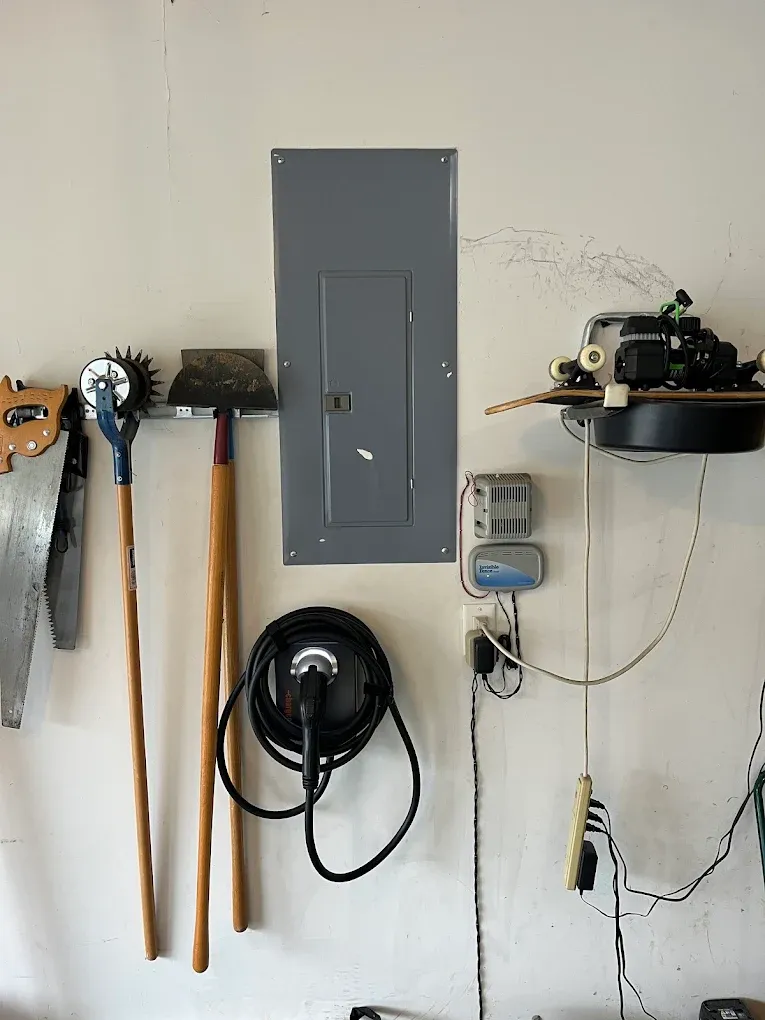
A Level 2 charger typically needs its own dedicated 40 to 60 amp circuit. A modern 200 amp panel usually absorbs that without drama. But plenty of Winchester homes, especially older houses near Old Town or homes still running 100 amp service, do not have the spare capacity. A load calculation by a licensed electrician tells you the truth before anyone drills a hole.

If the panel is full or undersized, you have options at different price points: a load management device that shares capacity intelligently, a subpanel, or a full panel upgrade. The upgrade sounds like the big spend, but it pairs well with an EV purchase, since you size it once for the charger plus whatever comes next, whether that is a hot tub, a workshop, or a second EV.

Your panel decides how simple the job is, Fox Trail Electric

Permits, inspections, and doing it by the book

EV charger circuits require an electrical permit and inspection, whether you are inside Winchester city limits or out in Frederick County. Your electrician should pull that permit, not you, and the inspection is a feature rather than a hassle: it verifies wire sizing, breaker selection, and protection requirements on a circuit that will run hard for hours nearly every night.

Skipping the permit creates problems that outlast the install. Insurance carriers can push back on claims tied to unpermitted electrical work, home inspectors flag it during a sale, and some charger manufacturers tie warranty coverage to professional, code compliant installation. This is not the corner to cut on a 40 amp circuit feeding a car in your garage.

Picking the charger and the spot

Chargers come hardwired or plug in, and both can be excellent. Hardwired units support higher amperage, look cleaner on the wall, and are the better choice outdoors. Smart features are worth a look too: scheduling lets you charge overnight when rates are friendlier, and load sharing models let two EVs split one circuit down the road.

Placement is about the car, not the wall. Mount the unit near where your charge port lands when you park, check that the cable reaches a second parking spot for the future, and use an outdoor rated unit if there is no garage. One more tip from experience: have your electrician run slightly heavier wire than today’s charger strictly needs. The next car will thank you.

Bottom Line

A Level 2 charger is one of the best quality of life upgrades an EV owner in Winchester can make. Expect roughly $1,200 to $2,700 all in for most installations, more if your panel needs help first, and remember that prices vary house to house. Start with a load calculation, insist on a permit, and size the circuit for where you are headed rather than just the car in the driveway today. Fox Trail Electric installs EV chargers across Winchester and Frederick County and can tell you in one visit exactly what your home needs.

Related reading: our charger installation services, Standby Generators for Winchester Homes: Your Storm Season FAQ

Standby Generators for Winchester Homes: Your Storm Season FAQ

Anyone who has lived through a Shenandoah Valley ice storm knows the drill: the lines sag, the power drops, and the guessing game begins about whether this is a two hour outage or a three day one. Meanwhile the sump pump sits silent, the well pump is dead weight, and the house gets colder by the hour.

Standby generators end the guessing. This FAQ covers the questions homeowners around Winchester ask us most: what these systems cost, how they differ from a portable, what size your home actually needs, and what installation and upkeep look like.

How much does a standby generator cost installed in Winchester?

Most whole home standby generator installations in Winchester run $9,000 to $16,000, including the generator, automatic transfer switch, pad, fuel connection, and electrical work. Smaller systems that cover essential circuits only typically run $6,000 to $10,000 installed. Prices vary with generator size, fuel setup, and how far the unit sits from your panel and gas source.

That is not a small number, so weigh it against a single long outage: a flooded basement the night the sump pump died, a freezer full of spoiled food, pipes freezing in February, and a couple of hotel nights. Families who work from home or depend on powered medical equipment usually stop doing that math after their first bad storm.

How much does a standby generator cost installed in Winchester?, Fox Trail Electric

What makes a standby generator different from a portable one?

A standby unit is permanently installed outside the house, runs on natural gas or propane, and starts itself. When utility power drops, the automatic transfer switch senses it and shifts your home to generator power in seconds, whether you are in the kitchen, at work, or out of town. No extension cords, no gas cans, no wrestling a portable machine across icy pavement at midnight.

Portables still have their place for camping and job sites, but they demand that you be home, they need refueling every few hours, and they only run whatever you physically plug into them. A standby system runs the furnace, well pump, sump pump, refrigerator, and lights like nothing happened, and it can do it for days if the fuel supply holds.

What size generator does a Winchester home need?

Essential circuit systems in the 10 to 14 kilowatt range cover heat, the refrigerator, the well and sump pumps, and key lights and outlets. Whole home units, usually 18 to 26 kilowatts, run everything including central air. The right answer comes from a load calculation rather than a brochure, because the startup surge from motors like AC compressors and well pumps is exactly what trips an undersized unit.

County homes deserve special attention here. If you are on a well instead of city water, losing power also means losing water, and well pumps pull a demanding startup load. Sizing around the well pump, the sump pump, and the furnace is what keeps a rural Frederick County home genuinely livable through a multiday outage instead of merely lit.

What size generator does a Winchester home need?, Fox Trail Electric

Why Winchester weather keeps making the case

Our outages cluster in two seasons. Winter brings the ice storms that coat lines and branches until something gives, sometimes taking out power along the Interstate 81 corridor for days. Summer brings fast, violent thunderstorms and the occasional derecho that drops trees across feeders faster than utility crews can clear them.

The pattern that matters is duration. Short blinks are an annoyance, but the multiday events are when the real costs stack up: frozen pipes, flooded basements, dark home offices, lost groceries, and long nights. A standby generator is not for the blinks. It is for the fourth cold night, when yours is the house on the street with the lights still on.

What do installation and upkeep involve?

Installation is a coordinated project: a pad outside, gas line work, the transfer switch at your panel, and permits and inspections through the city or county. Placement must respect code required clearances from windows, doors, and vents. Most installs wrap in a day or two once the unit is on site, and lead times on popular sizes stretch during storm season, which makes spring and early summer the smart window to schedule.

After that, the system mostly takes care of itself. It runs a brief automatic exercise cycle each week, and it needs an annual service visit for oil, filter, and battery checks, similar to maintaining a lawn tractor. Modern units send status alerts straight to your phone, so you will know it is ready long before the weather asks the question.

Bottom Line

A standby generator turns Winchester’s worst weather weeks into a nonevent. Expect roughly $6,000 to $10,000 installed for essential circuit coverage or $9,000 to $16,000 for whole home power, with prices varying by home and unit. Size it with a load calculation, permit it properly, and give it one service visit a year. Fox Trail Electric installs and services standby generators across Winchester and Frederick County, and we are glad to size your home before storm season arrives first.